Physical Address
304 North Cardinal St.
Dorchester Center, MA 02124
Physical Address
304 North Cardinal St.
Dorchester Center, MA 02124

Sometimes the things we buy to save money end up costing us far more than we ever imagined. A lesson I learned back in 2008 while working at a grocery store still reminds me why financial decisions should always start with a little math.
Back in 2008, I was in college and working part-time at a grocery store to help pay my bills. Like many college students, I wasn’t making much money. I was your typical entry-level grocery store employee: bagging groceries, helping customers find their way around the store, and occasionally offering to carry their groceries out to their cars.
It wasn’t a glamorous job, but it gave me an opportunity to interact with all kinds of people. Most of the interactions were ordinary. You bag someone’s groceries, exchange a few pleasantries, help them load everything into their vehicle, and move on to the next customer.
However, one particular interaction stuck with me. It was a seemingly insignificant conversation that eventually got me thinking about something much bigger: Why are so many Americans seemingly bad at personal finance?
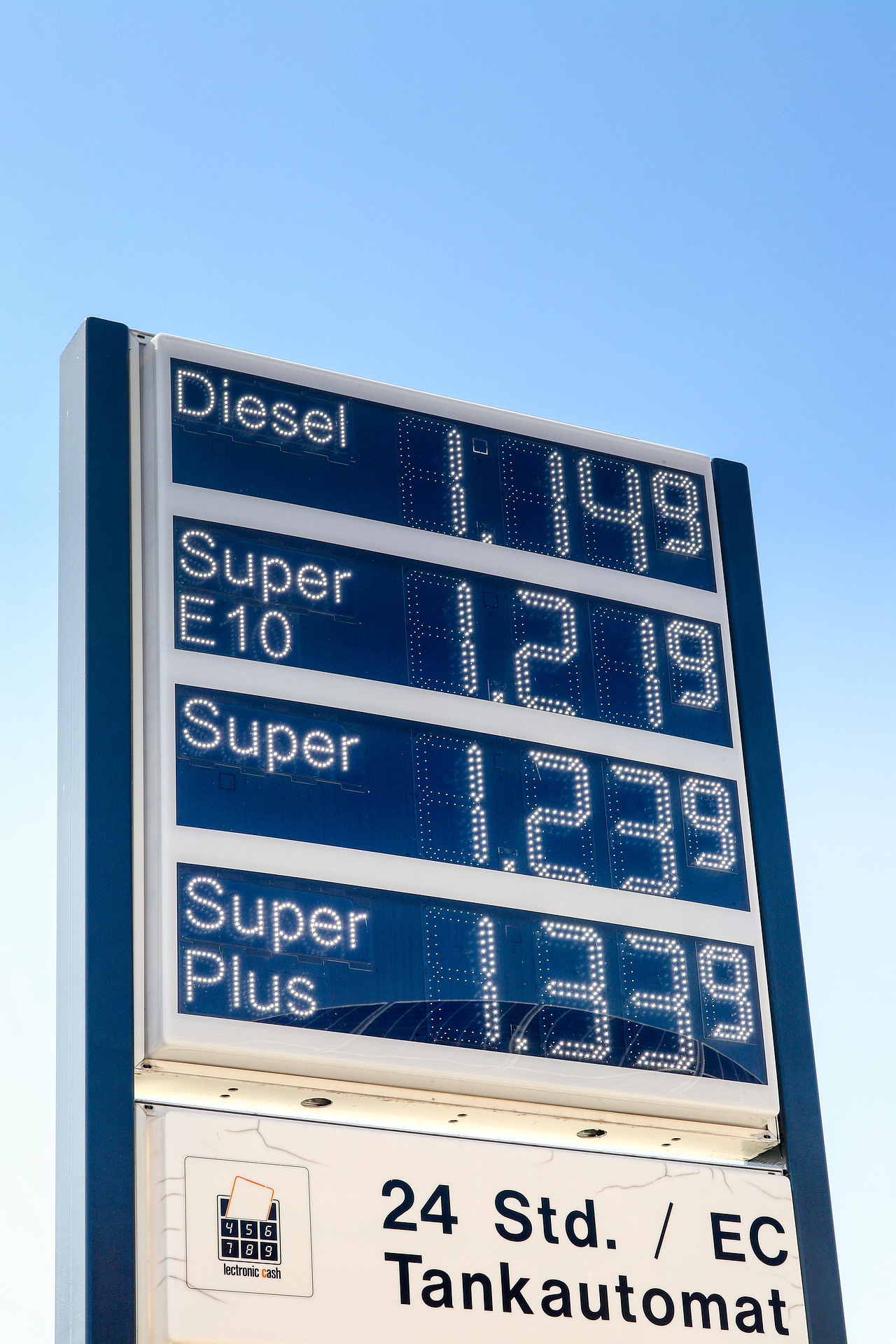
At the time, our grocery store had a promotion that offered customers a 10-cent discount per gallon of gasoline if they spent at least $50 on groceries. It was a pretty straightforward promotion. Spend a certain amount at the grocery store, earn a discount at the gas station, and save a little money when filling up your vehicle.
Given the economic environment in 2008, this promotion was particularly popular.
If you remember that period, you probably remember how expensive gasoline had become. Gas prices were approaching $5 per gallon in many parts of the country. People were frustrated, families were struggling with higher transportation costs, and everyone seemed to be looking for ways to save money at the pump.
So, naturally, customers were excited about getting that extra 10-cent discount.
One day, while helping a customer load her groceries into her vehicle, she mentioned how much she appreciated the promotion. She explained that she really needed that 10-cent discount on gasoline.
I understood her frustration. Nobody enjoys paying more for something they need every day.
But then I looked at the vehicle she was driving.
It was a Hummer.
Yes, a Hummer.
And that was when I started questioning the financial decisions people make.
I politely asked the customer why she had purchased a Hummer.
Her response was that diesel fuel was cheaper back then.
That was her reasoning. She had apparently chosen the vehicle because diesel fuel cost less than regular gasoline, believing that she would save money on fuel.
At first glance, that might sound reasonable. If one type of fuel costs less than another, wouldn’t it make sense to purchase a vehicle that uses the cheaper fuel?
Not necessarily.
The problem is that people often focus on one individual expense while completely ignoring the bigger financial picture.
Even if diesel fuel was cheaper at the time, how much money was she actually saving after considering the vehicle’s purchase price, fuel consumption, insurance, maintenance, and repairs?
A Hummer is not exactly known for being an economical vehicle. It is large, heavy, expensive to purchase, and generally expensive to operate.
Meanwhile, someone driving a more economical Honda or Toyota could potentially spend significantly less money over the same period.
The customer was celebrating a discount of 10 cents per gallon while driving a vehicle that could easily consume substantially more fuel than an ordinary passenger car.
It seemed contradictory.
She was trying to save money on gasoline, but her choice of vehicle might have been costing her far more than she was saving.
And that got me thinking: How many people make financial decisions this way?
One of the biggest mistakes people make with personal finance is focusing on a single number instead of looking at the entire cost of a decision.
We see this everywhere.
Someone buys a more expensive appliance because it is advertised as energy-efficient. Another person purchases a luxury vehicle because the monthly payment is supposedly affordable. Someone else buys a house farther away from work because the property is cheaper, without considering the additional commuting expenses.
In each situation, the buyer identifies one potential financial benefit and assumes the purchase is a good deal.
But personal finance doesn’t work that way.
You have to consider the total cost of ownership.
Let’s go back to the Hummer example.
Imagine comparing two vehicles:
Even if the Hummer uses cheaper diesel fuel, that doesn’t automatically make it the better financial decision.
You have to account for several factors:
1. Purchase price
The initial purchase price is one of the biggest expenses associated with buying a vehicle. If one vehicle costs tens of thousands of dollars more than another, that difference has to be justified somehow.
That money could otherwise be invested, saved, or used to pay down debt.
2. Fuel consumption
Cheaper fuel doesn’t necessarily mean cheaper transportation.
What matters is how much you spend to travel a certain distance. A vehicle that uses more gallons per mile can easily erase the savings from buying cheaper fuel.
3. Insurance
Larger, more expensive vehicles can come with higher insurance costs. The exact difference depends on the driver, location, vehicle, and coverage, but it is another expense that needs to be considered.
4. Maintenance and repairs
Vehicles require regular maintenance. Tires, brakes, oil changes, replacement parts, and unexpected repairs all add up.
An expensive vehicle can be particularly costly to maintain, especially as it gets older.
5. Depreciation
This is another expense people frequently overlook.
Vehicles lose value over time. The more expensive vehicle may also lose more money in absolute dollar terms, depending on its purchase price and resale value.
When you add all these expenses together, the cheaper fuel argument becomes much less convincing.
The point isn’t that buying a Hummer is automatically a bad financial decision. Someone might genuinely enjoy the vehicle, have plenty of money, and be perfectly comfortable paying for the experience.
The problem is claiming that the purchase is financially smart simply because diesel fuel costs less.
Those are two completely different arguments.
I think another reason people make these mistakes is that we naturally gravitate toward immediate, visible savings.
A 10-cent discount at the gas station feels good because you can see the savings immediately.
You fill up your tank, look at the discounted price, and feel like you accomplished something.
The same psychology explains why people get excited about sales, coupons, rebates, and promotional financing.
A store advertises 30% off, and suddenly customers feel like they are making a smart financial decision.
But saving 30% on something you didn’t need isn’t necessarily saving money. It is still spending money.
Likewise, saving 10 cents per gallon doesn’t automatically mean your vehicle is economical.
There is a big difference between spending less money and making a financially sound decision.
Sometimes people become so focused on getting a discount that they forget to ask whether the underlying purchase makes sense in the first place.
Consider someone who buys a $1,000 television because it is on sale for $700.
They might proudly tell their friends they saved $300.
But did they actually save $300?
If they weren’t planning to purchase a television in the first place, they spent $700 they otherwise would have kept.
The same principle applies to cars, houses, vacations, electronics, and just about every other major purchase.
A discount doesn’t turn a bad purchase into a good investment.
I understand that not everyone enjoys doing calculations. Personal finance isn’t necessarily exciting, and most people would rather spend their time doing something else.
But you don’t need to be an accountant, economist, or mathematician to make better financial decisions.
Sometimes all you need is a calculator and a few minutes of your time.
Before purchasing something expensive, ask yourself a few basic questions:
Let’s illustrate this with a simplified example.
Imagine two vehicles:
| Expense | Vehicle A | Vehicle B |
|---|---|---|
| Purchase price | $60,000 | $25,000 |
| Annual fuel cost | $2,500 | $2,000 |
| Annual insurance | $2,000 | $1,500 |
| Annual maintenance | $1,500 | $800 |
| Total first-year cost | $66,000 | $29,300 |
Illustrative numbers only, not historical Hummer or Honda/Toyota ownership figures.
Vehicle A costs $35,000 more upfront and another $1,700 annually in these estimated operating expenses.
Even if Vehicle A offers some fuel savings under different assumptions, you would need to calculate how many years it would take to recover the additional purchase cost.
And that calculation still doesn’t account for depreciation or the opportunity cost of tying up that extra $35,000.
Imagine investing that money instead.
Over a long period, the potential returns could be substantial.
This is why understanding opportunity cost is so important. Every dollar you spend on one thing is a dollar you cannot spend or invest somewhere else.
The real cost of a purchase isn’t always what you see on the price tag.
Now, I want to be fair to the woman I encountered at the grocery store.
I have no idea what her financial situation was.
Perhaps she was wealthy and could comfortably afford the Hummer. Maybe she simply loved the vehicle and didn’t care about the additional expenses.
There is absolutely nothing wrong with spending your money on things you enjoy, provided you understand the financial consequences.
Personal finance isn’t about refusing to buy anything nice or living your entire life as cheaply as possible.
It’s about making informed decisions.
If someone has millions of dollars in the bank and wants to drive an expensive vehicle, that’s their choice. They have the financial resources to support that lifestyle.
But if someone purchases an expensive vehicle, takes on a large monthly payment, struggles to pay their bills, and then celebrates saving 10 cents per gallon at the gas station, something isn’t adding up.
Unfortunately, many people confuse being able to afford a monthly payment with being able to afford the purchase.
Just because a lender approves you for a loan doesn’t mean you should take it.
Just because you can make the monthly payment doesn’t mean the purchase is financially responsible.
And just because something is advertised as a money-saving opportunity doesn’t mean it will actually save you money.
Financial literacy is about understanding these distinctions.
One of the most valuable lessons in personal finance is learning to look beyond today.
People often make purchases based on how they feel in the moment. They want the bigger house, the nicer car, the newest phone, or the more expensive vacation.
There is nothing inherently wrong with wanting these things.
However, every financial decision has consequences that extend beyond the day you make the purchase.
A vehicle payment might seem manageable today, but what happens if you lose your job?
A bigger house might look beautiful, but what happens when property taxes, insurance, utilities, and maintenance start adding up?
A credit card purchase might feel harmless today, but what happens when interest starts accumulating?
These are the questions we should be asking ourselves before making major financial commitments.
The goal isn’t to eliminate enjoyment from life. The goal is to avoid sacrificing your financial future for purchases that provide only temporary satisfaction.
Sometimes the smartest financial decision is choosing the less exciting option.
Driving a reliable, economical vehicle might not turn heads, but it could leave you with thousands of extra dollars over the years.
Living in a slightly smaller house might not impress your friends, but it could give you more financial flexibility.
Buying something because you actually need it, rather than because it is on sale, could help you keep more money in your pocket.
Those decisions might not be glamorous, but they can make a tremendous difference over time.
That conversation at the grocery store happened back in 2008, but I still think about it today.
I was just a college student working part-time, bagging groceries and helping customers carry their purchases to their cars. I wasn’t a financial expert, and I certainly didn’t have all the answers.
But that interaction taught me something important about human behavior and money.
People can become so focused on saving a little money in one area that they completely overlook how much they are spending somewhere else.
They celebrate a discount without calculating the total cost. They focus on monthly payments instead of the purchase price. They chase short-term savings while ignoring long-term expenses.
And that’s how seemingly small financial mistakes can turn into expensive habits.
I don’t believe everyone needs to become an expert in personal finance. But I do believe everyone should understand the basics of budgeting, debt, interest, opportunity cost, and total cost of ownership.
Before you make your next major purchase, take a step back.
Don’t just ask yourself whether you can afford it. Ask yourself whether it makes financial sense.
Don’t just look at the discount. Look at the total cost.
Don’t just focus on how much money you might save today. Consider how much money the decision could cost you over the next five or ten years.
Because sometimes, the best way to save money isn’t finding another 10-cent discount at the gas station.
It’s making sure you didn’t spend thousands of dollars unnecessarily just to get that discount in the first place.