Physical Address
304 North Cardinal St.
Dorchester Center, MA 02124
Physical Address
304 North Cardinal St.
Dorchester Center, MA 02124

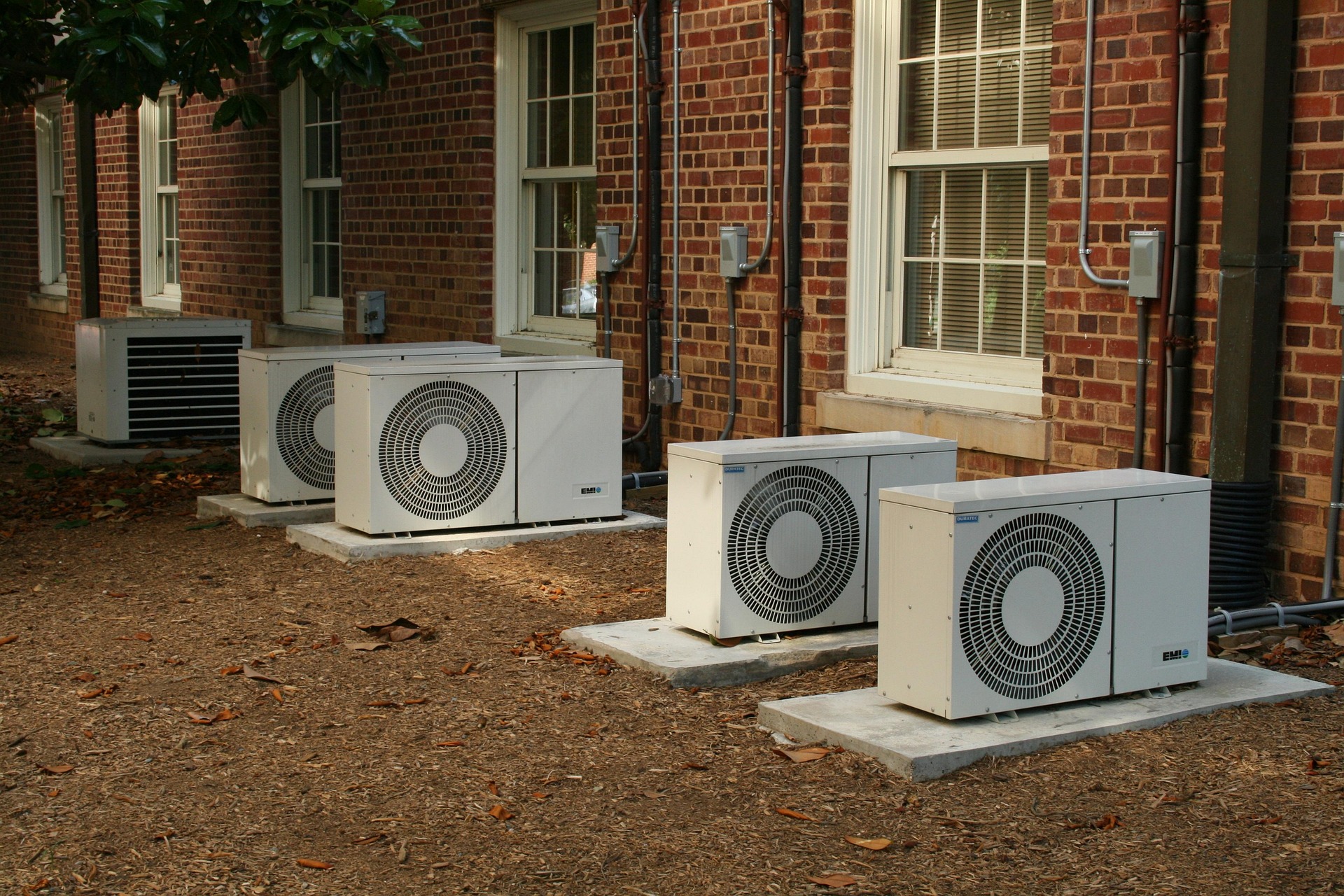
Buying a home is already a major financial commitment. Add a renovation project on top of the purchase, and suddenly you realize just how quickly the expenses can add up.
My wife and I recently purchased a home that was in need of some renovations before we could move in. We knew going into the purchase that there were going to be some things we needed to take care of, but I don’t think we were 100% prepared for just how much work—and how many quotes—we would end up dealing with.
There were several major projects on our list. We needed new kitchen cabinets, a new dishwasher, new bathroom vanities, a new AC and furnace, and a new water heater. Some of these projects were obvious because the existing items were outdated or simply needed to be replaced.
But two of the bigger projects—the AC/furnace and water heater—were a little different.
They were still working.
Technically, we didn’t have to replace them immediately.
That created a decision for us: Do we continue using them until they eventually fail, or do we replace them now while the house is already being renovated and before we move in?
After thinking about it, we decided that we might as well replace them now.
The last thing we wanted was to move into our new home and then have the AC or water heater suddenly fail months later. If we were going to spend money renovating the house anyway, we figured it made sense to take care of some of these major systems while we had the opportunity.
What I didn’t expect was how dramatically the quotes would vary from contractor to contractor.
The first thing we tackled was the AC and furnace.
I contacted a few companies to get estimates because I wanted to understand what the project would realistically cost. I wasn’t expecting every quote to be identical, but I also wasn’t expecting such a massive difference between them.
The first person we spoke with quoted us nearly $20,000 for the AC and furnace replacement, including labor and parts.
Nearly $20,000.
That was already significantly higher than what we were expecting to pay.
But the quote didn’t stop there.
The contractor also insisted that we needed to replace the tubing because it was old. That would cost another $5,000.
Now we’re talking about approximately $25,000 for the project.
At that point, I started questioning whether I was completely out of touch with current HVAC pricing.
Maybe I was.
So naturally, I decided to get another quote.
The second contractor came in at around $15,000 for the AC and furnace, including labor and parts. The contractor presented the price in a way that made it sound like we were receiving a special deal.
“Normally it would cost more, but we’re giving you a better price.”
Except $15,000 was still much higher than what I was expecting.
I wasn’t convinced.
Then, coincidentally, I received a flyer in the mail advertising AC and furnace replacement for around $12,000, including parts and labor.
Now I had even more questions.
If one company was willing to do the work for around $12,000, why were other companies quoting $15,000, $20,000, or even $25,000?
Were all of these companies doing something completely different?
Was the equipment different?
Was the installation significantly different?
Or was I simply looking at companies with dramatically different pricing structures?
That’s when I decided to keep looking.
Eventually, I found another contractor who gave us a quote that was roughly two to three times less than the first few quotes.
Two to three times less.
At that point, it became very clear why getting multiple estimates is so important.
The water heater was another example of how dramatically contractor pricing can differ.
The first person quoted us approximately $7,000 to replace the water heater, including labor and parts.
Again, I was shocked.
I understand that you’re paying for more than just the water heater itself. There is labor involved. There are materials, permits, disposal fees, transportation, overhead, insurance, and the contractor needs to make a profit.
I completely understand that.
But $7,000?
We had already started looking at water heater prices ourselves, and the actual units were nowhere near $7,000.
Depending on the size and type, many residential water heaters can cost somewhere around $500 to $2,000.
So how does a water heater that costs a fraction of that end up becoming a $7,000 project?
That’s where I started becoming much more curious about contractor pricing.
Interestingly enough, the same person who had quoted us for the AC and furnace offered to replace our water heater for only $200 in labor.
There was one catch.
We would purchase the water heater ourselves.
Suddenly, the math made a lot more sense.
If I purchased a water heater for, let’s say, $1,500 and paid $200 for installation, the total would be nowhere close to $7,000.
That made me wonder what exactly was happening with the original $7,000 quote.
This is the question that kept running through my head.
Why do some companies mark up installation and equipment so significantly?
There are legitimate reasons why contractors charge more than the retail price of a product.
A professional contractor has expenses that a homeowner doesn’t have. They may have employees to pay, commercial vehicles, insurance, licensing costs, tools, office expenses, advertising, training, warranties, and other overhead.
They also take responsibility for the installation.
If something goes wrong, the homeowner isn’t necessarily going to call the manufacturer. They’re going to call the contractor.
So there is certainly value in professional installation.
But there is a difference between charging a reasonable amount for a service and charging whatever you think the customer will tolerate.
And as a consumer, you don’t necessarily know where that line is.
That’s why comparison shopping is so important.
I understand why someone might accept the first quote they receive.
Imagine you’re a homeowner and your AC isn’t working during a heat wave. You call the first company that answers the phone. They come out, inspect the system, and tell you it will cost $15,000 to replace it.
You don’t have air conditioning.
You’re uncomfortable.
You don’t want to spend another week calling companies.
So you sign the contract.
The contractor gets the job, and you get your AC back.
There’s nothing inherently wrong with that.
But what if another company would have done the exact same job for $8,000?
That’s where things become frustrating.
The homeowner may never know.
And that’s why I think some businesses may be willing to quote extremely high prices. They know that some customers don’t have the time, knowledge, or desire to shop around.
I’m not saying every expensive quote is an attempt to take advantage of a customer. There can be legitimate differences in equipment, scope of work, warranty coverage, installation requirements, and company overhead.
But when you receive quotes that differ by thousands—or even tens of thousands—of dollars, you owe it to yourself to understand why.
One thing I’ve learned over the years is that saving money isn’t necessarily about refusing to spend money.
Sometimes it’s about asking questions.
Why does this cost so much?
What exactly am I paying for?
Can I purchase the equipment myself?
Is this replacement actually necessary?
What happens if I don’t replace it?
Are there different equipment options?
Does the quote include permits?
Does it include disposal?
What kind of warranty comes with the work?
Can I get the quote in writing?
These questions don’t make you a difficult customer.
They make you an informed customer.
And when you’re spending thousands of dollars on a renovation, you should be an informed customer.
One of the biggest lessons I took away from this experience is that you don’t have to accept a quote simply because someone gave it to you.
A quote is an offer.
You can say no.
You can get another quote.
You can ask another contractor.
You can negotiate.
You can wait.
And sometimes, walking away is the best financial decision you can make.
There is no rule saying that the first contractor who comes to your house automatically gets the job.
In fact, I think the opposite should be the norm for expensive home projects.
Get at least a few quotes.
Compare what each company is offering.
Make sure you’re comparing apples to apples.
Look at the equipment.
Look at the labor.
Look at warranties.
Look at permits and additional materials.
And most importantly, ask why one quote is dramatically higher or lower than another.
Buying our new home has already taught me a lot about renovations.
Before this experience, I understood that contractors had different prices, but I didn’t realize just how large the difference could be.
When you’re dealing with something that costs a few hundred dollars, a small price difference might not matter much.
But when you’re dealing with a $10,000, $15,000, or $20,000 project, a price difference of several thousand dollars can completely change the financial equation.
And when you’re renovating multiple areas of a home, those differences compound quickly.
A few thousand dollars saved on HVAC.
A few thousand dollars saved on plumbing.
A few thousand dollars saved on kitchen cabinets.
Before you know it, you could potentially save enough money to pay for another major portion of the renovation.
That’s real money.
Ultimately, I’m not saying that every contractor who provides a high quote is trying to overcharge you.
There are many honest and hardworking contractors who provide excellent service and deserve to make a profit.
But as homeowners, we also have a responsibility to protect ourselves financially.
Don’t assume the first quote is the market price.
Don’t assume a contractor’s statement that you’re “getting a deal” means you’re actually getting a good deal.
Don’t assume that because someone is a professional, their quote automatically represents the best price available.
Do your homework.
Shop around.
Ask questions.
Get multiple opinions.
And don’t be afraid to walk away.
My wife and I learned this lesson firsthand during our renovation. What started as a simple attempt to replace our AC, furnace, and water heater turned into a crash course in contractor pricing.
The biggest lesson?
Don’t settle for the first quote.
You might get lucky and receive a fair price from the first person you call. But you might also discover that another contractor is willing to do essentially the same work for thousands of dollars less.
When you’re spending your hard-earned money, there’s nothing wrong with taking the time to find out.
Because once you sign the contract and hand over the money, it’s too late to wonder whether you could have gotten the same work for less.