Physical Address
304 North Cardinal St.
Dorchester Center, MA 02124
Physical Address
304 North Cardinal St.
Dorchester Center, MA 02124

A few weeks ago, I wrote a post about why I’m not a big fan of coffee—especially the kind that comes with a $5 price tag and a trendy logo on the cup. I made the argument that paying that much for something you can make at home for less than fifty cents just doesn’t make sense. The math alone feels like a wake-up call. But after some readers chimed in about the “experience” of coffee shops—the cozy atmosphere, the aroma of espresso, the friendly baristas—I realized there’s another part of this story worth talking about: the food.
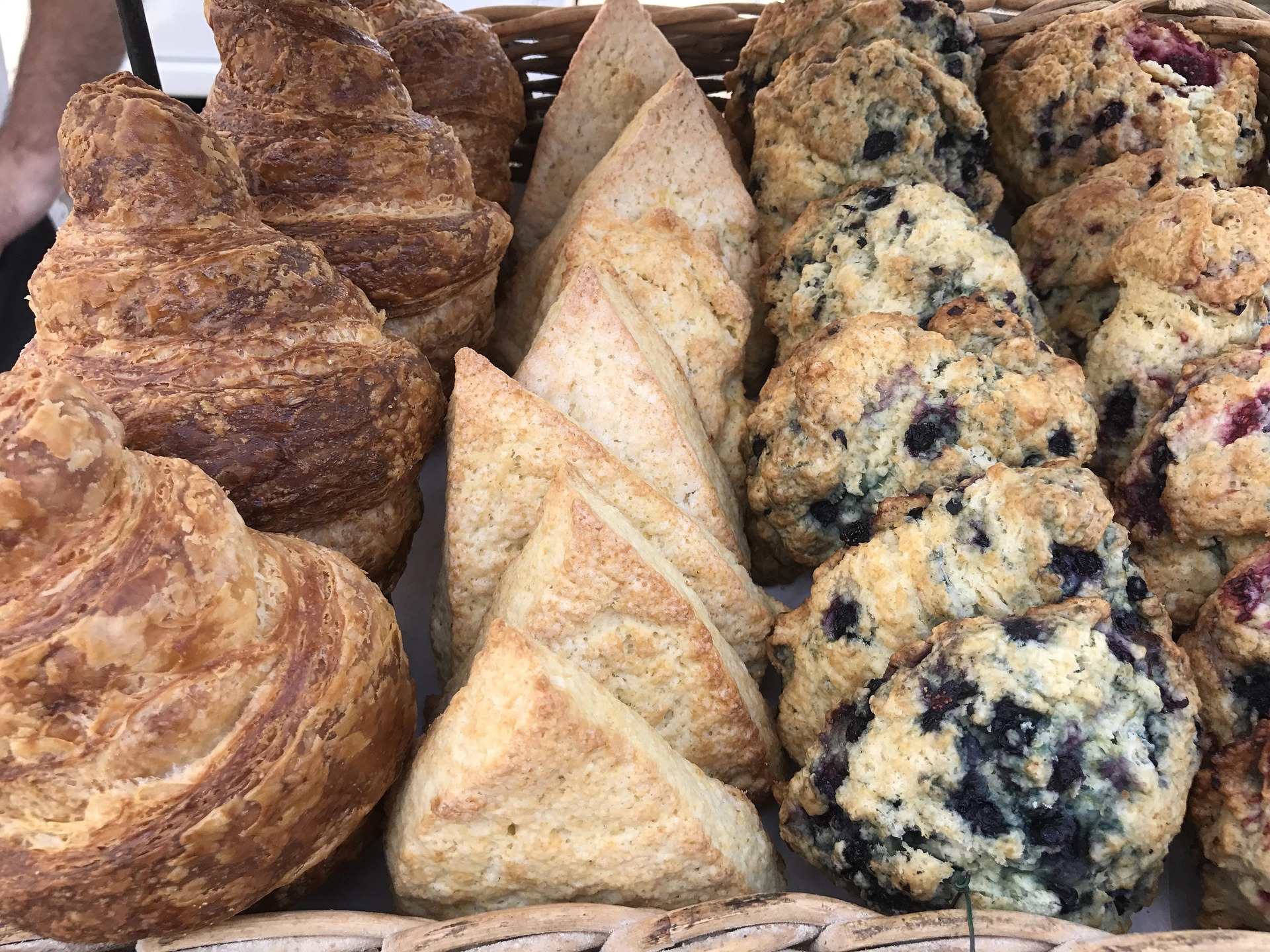
You know, the pastries, muffins, croissants, and those irresistible-looking slices of banana bread that seem to whisper to you from behind the glass case. Because let’s be honest, even if you go in just for a latte, there’s always that temptation to add a little something sweet. I used to think those treats were part of the magic—freshly baked that morning, maybe even made from scratch in some hidden kitchen. But the truth is far less romantic.
And I know that because I used to work behind the counter.
Back in my college days, I worked at both Starbucks and Jamba Juice. It was your typical student gig—early mornings, endless drink orders, and the smell of syrup that somehow seeps into your clothes. At first, I thought it was a fun, easy job with free caffeine perks. But then I saw what really went on behind the shiny display case.
Let’s talk about those pastries.
If you’ve ever walked into a coffee shop and marveled at the “freshly baked” muffins, croissants, or scones perfectly arranged on trays, here’s a little insider truth: they’re not fresh. They’re not baked in-house. In fact, most of them were frozen when they arrived.
I remember my first night closing shift at Starbucks. My manager handed me a list of tasks—wipe down counters, clean the espresso machine, restock napkins—and then, at the bottom, I saw it: “Defrost pastries for tomorrow.”
I stared at it for a second, thinking, Wait, what? Defrost?
Sure enough, I went to the back freezer, and there they were—boxes stacked neatly, filled with frozen croissants, muffins, and coffee cakes. We’d take out what we needed, place them on trays, and leave them in the refrigerator overnight to thaw. By the next morning, they’d be moved into the display case, ready for sale.
And just like that, “freshly baked” turned out to mean “defrosted yesterday.”
I get it—running a large chain means consistency is everything. You want your blueberry muffin in Los Angeles to taste exactly like the one in New York. But that consistency comes at a cost: authenticity.
There’s a difference between a croissant that was laminated, rolled, and baked by a local baker that morning, and one that was mass-produced in a factory, frozen, and thawed out to give the appearance of freshness. Yet, they’re priced almost the same. Sometimes, the frozen one even costs more.
When you buy that $5 pastry at a big coffee chain, you’re not just paying for the ingredients. You’re paying for the brand, the convenience, the overhead, and the illusion of freshness. But freshness, my friends, is not something you can fake with a microwave or a defrost cycle.
It’s almost funny when you think about it. We roll our eyes at “fast food,” yet we line up for “fast pastries,” believing they’re somehow better because they’re sitting under soft lighting in a glass case next to a barista with a nose ring and a good playlist.
To me, “fresh” should mean something made that day—or at least baked that morning. The kind of pastry that still has that slightly uneven, human-made look. The kind where you can taste the butter, not the freezer burn.
There’s a big difference between the croissant you get from a local bakery that starts their day at 3 a.m. and the one you grab with your venti latte at a chain. At a bakery, there’s a craft to it. There’s time, patience, and real ingredients involved.
But the coffee shop version? It’s a product of logistics and efficiency. It’s about how to move thousands of identical muffins across hundreds of stores without them spoiling.
That’s not to say they taste bad. Some of them are actually pretty decent. The lemon loaf at Starbucks, for example, was always a crowd favorite when I worked there. But it’s not fresh-baked. It’s manufactured freshness, designed to taste like it just came out of the oven—even though it came out of a freezer truck.
So why do we pay $5 for a defrosted pastry?
It’s simple: branding and convenience. Starbucks and Jamba Juice aren’t just selling food—they’re selling an experience. The smell of roasted coffee beans, the curated playlists, the friendly “What’s your name for the cup?” routine—it all feels personal, even when it’s perfectly scripted.
You’re paying for the vibe. You’re paying for the idea that you’re treating yourself.
And for a lot of people, that’s worth it.
But here’s the thing: when you realize that most of that money isn’t going toward higher-quality ingredients or real craftsmanship, it kind of takes the magic away. You start to think about what else you could get for that same $5—a real, freshly baked pastry from a local bakery, maybe even two if you find the right place. Or the ingredients to make a dozen muffins at home.
Working at Starbucks and Jamba Juice wasn’t a terrible experience—it actually taught me a lot about business, consistency, and customer service. But it also gave me a peek behind the curtain that most people never see.
At Starbucks, I learned that efficiency rules everything. Every process is timed, every recipe measured down to the pump of syrup. There’s very little room for creativity or improvisation, because that could lead to inconsistency.
At Jamba Juice, it was similar. Smoothies were made from pre-measured frozen fruit packs. The pastries? Same story—frozen, thawed, and sold as “fresh.”
These are billion-dollar brands, and they run like well-oiled machines. But that’s exactly the point—they’re machines. The food might be edible, even enjoyable, but it’s not made with care or passion. It’s made with precision and profit margins in mind.
After those jobs, I started paying more attention to where I buy my food. I began exploring small local cafés and bakeries, the kind where you can actually smell the bread baking in the morning. The prices weren’t always cheaper, but they felt more justified. Because when you pay $4 or $5 there, you’re supporting someone’s craft, not a corporate supply chain.
There’s a level of authenticity that you just can’t fake. You can taste it in the crumb of a muffin that’s just come out of the oven, in the flakiness of a croissant that hasn’t spent weeks in a freezer.
And maybe that’s the real takeaway here: it’s not about the price—it’s about the value.
If you’re going to spend $5 on a pastry, it should be worth your money, your time, and your trust.
What’s fascinating is how these big coffee chains use language to blur the lines between “fresh” and “recently thawed.” You’ll see words like baked daily, locally prepared, or freshly served. Technically, they’re not lying—those pastries are baked somewhere daily, just not there. And “freshly served” just means it was defrosted recently enough to not be soggy.
It’s a masterclass in marketing psychology. We fill in the blanks. When we hear “freshly baked,” we imagine someone in the back kneading dough and pulling trays out of the oven, not someone unsealing a box from a freezer truck.
It’s not deception in the legal sense—it’s more like a shared delusion. We want to believe it’s fresh because it makes us feel better about spending $5 on it.
If you’re like me and you enjoy pastries but hate feeling ripped off, try this: bake something yourself once a week.
I started doing this during college when I got tired of paying for coffee shop muffins. I’d make a batch of banana bread or blueberry muffins on Sunday, and they’d last me all week. The cost? Maybe $4 total—and that’s for a dozen muffins, not one.
There’s something satisfying about that kind of simplicity. You know what’s in your food. You can control the sugar, the butter, the flavor. And when you eat it, it’s actually fresh.
It also changes the way you think about convenience. Because after you’ve baked your own, the idea of paying $5 for a frozen one just feels… silly.
Look, I’m not here to ruin anyone’s morning ritual. If grabbing a latte and a croissant from Starbucks makes your day a little brighter, go for it. Life’s too short to skip small pleasures.
But maybe next time you’re standing in line, eyeing that glossy pastry in the case, just take a second to think about where it really came from. Ask yourself if it’s worth $5 for something that was frozen a week—or a month—ago.
Because once you know what “fresh” actually means in the world of coffee chains, it’s hard to unsee it.
And who knows—maybe you’ll find a small bakery nearby that bakes everything in-house. Maybe you’ll dust off your oven and try making something yourself. Either way, you’ll get more for your money—and a real taste of what fresh actually is.