Physical Address
304 North Cardinal St.
Dorchester Center, MA 02124
Physical Address
304 North Cardinal St.
Dorchester Center, MA 02124

I’ll be honest: I tend to hate on Starbucks. Maybe it’s because I used to work there during my college years and saw the chaos behind the counter. Maybe it’s because the idea of paying five, six, or sometimes seven bucks for a cup of liquid bean juice still blows my mind. Or maybe it’s because Starbucks, a multibillion-dollar corporation, somehow pays its employees barely above minimum wage while charging customers premium prices for drinks that half the time aren’t even made the way they imagined them.
Whatever the reason, every time I step into a Starbucks today, I feel a flashback coming—not the peaceful kind where you remember a nostalgic childhood moment, but the kind where you relive the trauma of customers yelling at you because the venti caramel macchiato they ordered wasn’t caramel-y enough for their taste buds. I’m not joking when I say working at Starbucks exposes you to a whole new species of customer. There are the super customized drink people, the impatient line-hoppers, the confused ones who think “mocha” is a type of milk, and then there are the ones who refuse to acknowledge that Starbucks is, in fact, a coffee shop.
So buckle up, because I’m about to take you through one of the most ridiculous experiences I ever had working there—an experience so bizarre that even years later, I still think about it and shake my head.
If you’ve never worked at Starbucks—or any fast-paced food service job—you might think the job is simple. You take orders, make drinks, call out names, and smile. Pretty straightforward, right?
Well, no.
Because when you work at Starbucks, you don’t just deal with drinks. You deal with personalities, attitudes, entitlement, impatience, indecision, and occasionally someone trying to pay with a torn-in-half gift card they “swear still has money on it.” You deal with customers who want you to make their drink exactly the way they envisioned it in their head—even if they didn’t tell you what that vision was. You deal with people who get furious if their caramel drizzle forms a slightly different pattern on the foam than what they saw on Instagram. You deal with long lines of caffeine-deprived adults who are just seconds away from having a meltdown.
But the worst part isn’t even the customers—it’s the combination of customers and the drink customization system.
Starbucks drinks are basically scientific formulas mixed with artistic interpretation. And to make communication easier, baristas use short codes: M for mocha, L for latte, H for hot chocolate, WM for white mocha, SK for skinny, and so on. After a while, these codes become second nature. You don’t think about them anymore; they just flow into your hands like muscle memory while you’re trying to keep up with a line of twenty orders and a drive-thru at the same time.
But then one day, Starbucks decides to release a new promotional drink and everything falls apart.
This story takes place during the era when Starbucks released the “Skinny Mocha.” Basically the same mocha everyone knows, except sugar-free and made with non-fat milk. Nothing complicated. Nothing life-changing. But enough to confuse people—customers and baristas.
The drink code seemed obvious: SKM or SM. Our store used SM. Easy. So when I saw the order for “SM,” I did what any normal barista would do—I made a skinny mocha. I steamed the milk, pumped the sugar-free mocha syrup, pulled the shots, mixed it all together, and sent it out.
Then the customer took the drink, took one sip, and looked at me like I had served them a cup full of blended trash.
“What is this?” they asked.
“A skinny mocha,” I replied, wondering what the problem was. Maybe they wanted extra hot. Maybe they wanted no foam. Maybe they wanted fewer pumps. I was ready to fix it. But nope—that wasn’t the issue.
“This isn’t what I ordered,” they said.
Okay, round two.
I thought, maybe they meant skinny white mocha—a popular drink at the time. Sometimes people just forget to say “white.” So I apologized, remade the drink as a skinny white mocha, and handed it back.
They sipped it. They frowned again.
Still wrong.
At this point I’m two drinks in, behind on orders, and starting to wonder if they accidentally chose the wrong name when placing the order. But I stayed patient. I tried again. A third time. I don’t even remember which variation I made—maybe a half-caf, maybe an extra shot, maybe something completely random out of desperation. It didn’t matter, because that one wasn’t right either.
Three drinks wrong.
That’s when I finally did something I should’ve done from the beginning—I walked over to my coworker at the register and asked what the customer actually ordered.
Her answer nearly made my brain explode.
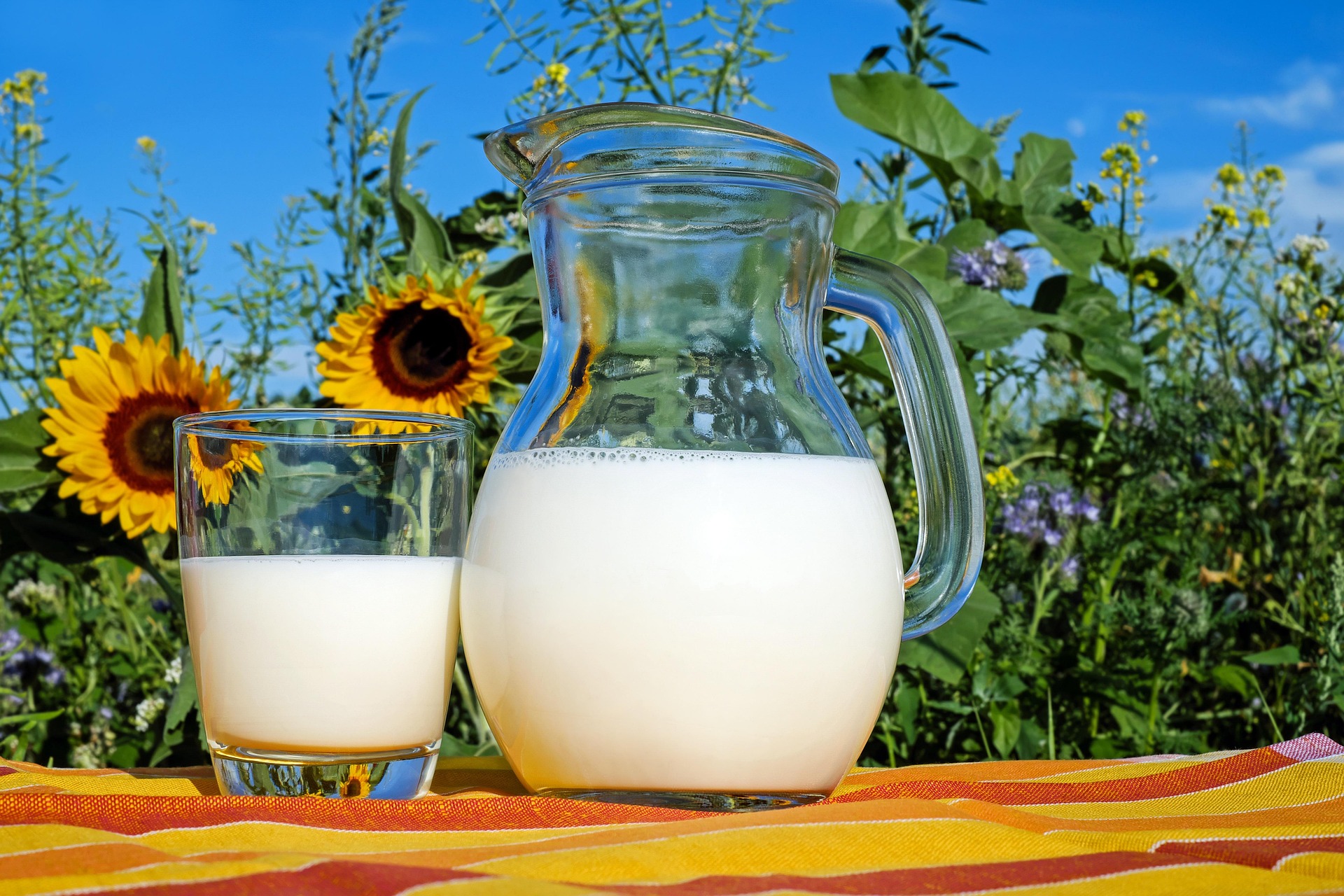
“It’s just steamed milk.”
I blinked. “Just steamed milk?”
“Yeah, they asked for steamed milk. SM means steamed milk.”
I swear my soul left my body for a moment. I had spent the last several minutes making actual coffee drinks for someone who apparently walked into Starbucks, bypassed all the lattes, all the mochas, all the seasonal drinks, and all the frappuccinos—and decided they wanted…hot milk.
Just hot milk.
Four dollars.
For heated milk.
A whole gallon at the grocery store was the same price.
I was speechless. I remade the drink—fourth time’s the charm—and handed it to the customer.
They smiled and said, “Sorry, I don’t do coffee.”
And that was the moment I nearly lost my mind.
Because why—WHY—would someone who “doesn’t do coffee” walk into a coffee shop and order steamed milk like this was some kind of trendy milk bar?
It felt like a vegan walking into a steakhouse and asking, “Do you have anything without meat?” Sure, technically places can adapt, but why go there in the first place? Why put yourself—and everyone else—through that?
I’m convinced some people wake up and choose chaos.
You’d think that years after quitting Starbucks and moving on with my life, this steamed-milk fiasco would fade away. But no. Stories like this stick with you the same way coffee scent sticks to your clothes after a shift.
Maybe it’s because customers like this weren’t rare. I dealt with people ordering drinks without understanding what they were, then complaining about them, then demanding remakes like we were their personal beverage architects. I dealt with grown adults yelling because their frappuccino wasn’t “icy enough” or their latte wasn’t “latte-y enough.”
Maybe it’s because the whole system is designed to make baristas miserable. You’re expected to smile, take orders, make drinks, and deal with people acting like they paid for first-class VIP concierge coffee service—even though they paid $4.95 and left no tip. You’re expected to handle customizations that look like chemistry experiments. You’re expected to keep your cool when someone decides to lecture you because their drink “felt lighter than last time.”
But honestly, I think it sticks with me because the steamed milk customer perfectly represents the weirdness of Starbucks culture. This is a place that markets fancy specialty drinks, trains employees to memorize dozens of codes, and creates systems to streamline complex drink customization—and then people walk in and order hot milk like it’s nothing.
It’s like buying a ticket to Disneyland just to sit on a bench and people-watch.
You do you, I guess.
Another reason I still have a grudge toward Starbucks is the ridiculously obvious price-to-pay ratio—not for customers, but for employees. You’d think with the amount they charge for a single cup of coffee, employees would be rolling in cash. But nope. Most baristas make barely above minimum wage, if that.
Meanwhile, customers complain like they’re at a luxury resort.
“It took too long.”
“This isn’t the right shade of brown.”
“There’s not enough whip.”
“This has too much whip.”
“Is this almond milk or air-frothed unicorn essence?”
People forget that baristas are humans learning a giant list of overly complicated drink recipes while dealing with a nonstop rush of caffeine-deprived customers. And all for wages that barely cover a bag of Starbucks coffee beans.
Maybe if Starbucks paid their workers more, they’d have less turnover and fewer frustrated baristas trying to interpret cryptic drink codes that apparently stand for six different things depending on the day.
The steamed-milk customer taught me a valuable life lesson: don’t go to places you’re not actually interested in. Don’t show up at a coffee shop if you don’t do coffee. Don’t walk into a steakhouse if you’re vegan. Don’t go to a bar if you don’t drink and then complain that people are drinking. Don’t go to Disneyland and complain that it’s full of kids.
You’re setting yourself up for disappointment and everyone around you for confusion.
If you don’t like coffee, Starbucks is probably not your place—and that’s okay. There are millions of other places that would gladly sell you non-coffee drinks without confusing an entire barista team.
But please, for everyone’s sanity, don’t go somewhere just to get something you could’ve made at home for 10 cents.
Even though my Starbucks days are long behind me, the memories—good and bad—stick around like the smell of burnt espresso on a busy afternoon shift. The steamed-milk incident was one of those experiences that perfectly captured the chaos, humor, frustration, and sheer absurdity of working at Starbucks.
At the end of the day, Starbucks is a business that thrives on overcomplicated drinks, overpriced coffee, and customers who want to feel special. Baristas are just trying to survive the shift without crying into the whipped cream canister.
And me? I’ll always have a little bitterness toward Starbucks—and not the good kind that comes from a well-pulled shot of espresso.