Physical Address
304 North Cardinal St.
Dorchester Center, MA 02124
Physical Address
304 North Cardinal St.
Dorchester Center, MA 02124

Before 2017, the idea of dealing with a Homeowners Association—an HOA—was something I barely even thought about. I’d heard people complain about HOAs over the years, but it always sounded like background noise, the kind of thing you hear at family gatherings or from coworkers who discuss property frustrations like it’s a sport. I never had a reason to pay attention, because I wasn’t a homeowner. I wasn’t paying HOA dues. I wasn’t navigating their rules. And honestly, I assumed people exaggerated how bad they were.
Then 2017 happened.
That was the year I became somewhat of a homeowner. I say “somewhat” because technically I was a co-signer on the mortgage loan—not the primary buyer—but I lived in the home, shared responsibilities, and, as it turned out, got a front-row seat to the circus that is dealing with an HOA. The only difference between being a co-signer and a full owner is the name order on the paperwork. Everything else you experience just the same—including the joy of receiving absurd HOA notices.
And let me tell you… I learned very quickly why people hate HOAs so much.
The very first time I had to interact with the HOA, I naïvely thought it would be a simple, rational conversation. Maybe they had a question. Maybe we forgot some small detail when we moved in. Maybe they were welcoming us to the community.
Nope.
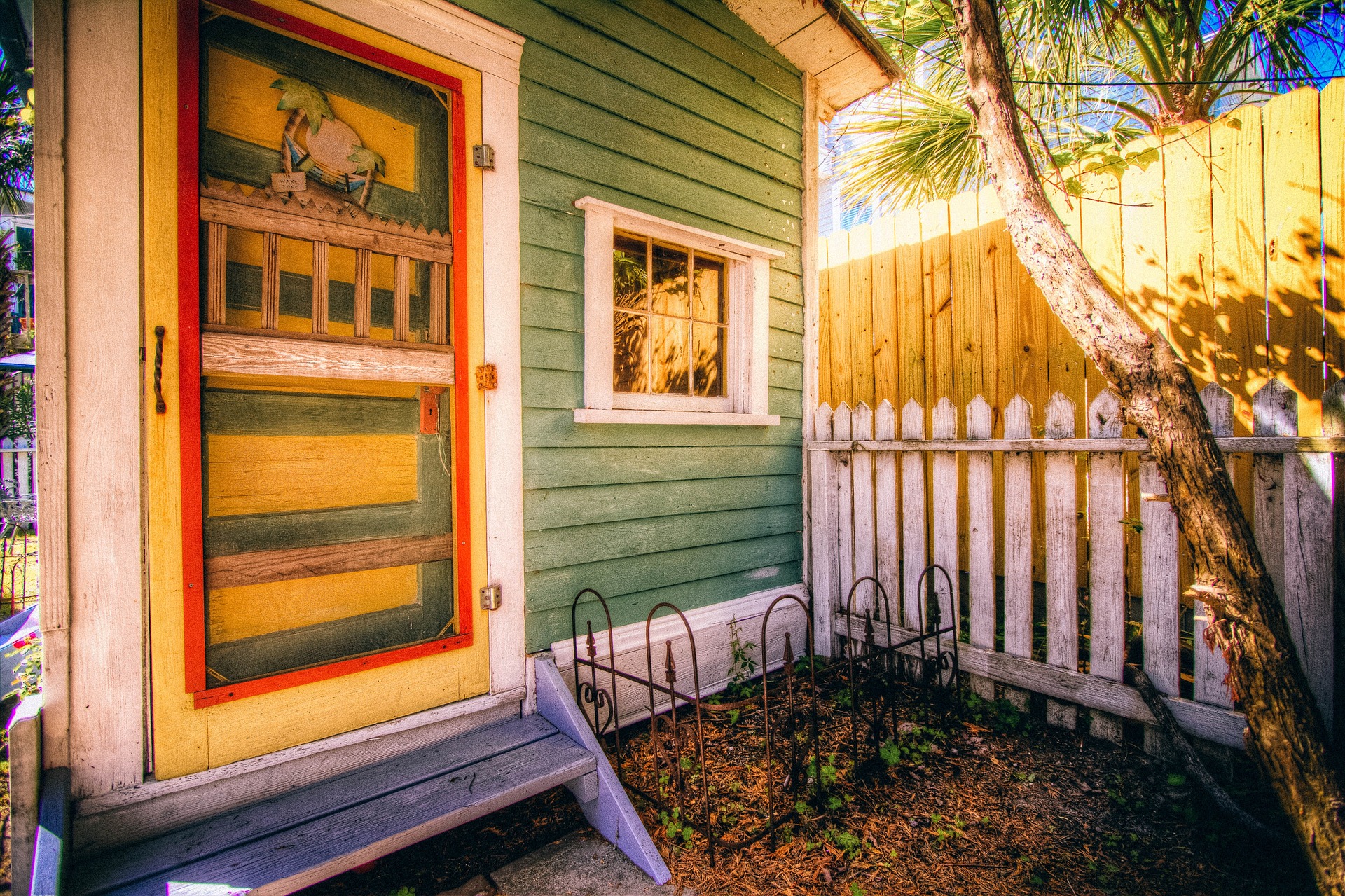
Instead, they claimed that a small area inside our fenced yard—yes, inside—belonged to them. Not just the land around the house, not the shared walkways, not a community greenbelt… but a literal section within the boundaries of our private fenced backyard.
Make that make sense.
Imagine someone fencing your yard, handing you the keys, telling you it’s yours, and then saying, “Oh by the way, this corner over here belongs to us, not you. You can’t put anything there. But also, you need to take care of it.”
If that sounds stupid, it’s because it is.
According to them, we weren’t allowed to place anything—no chairs, pots, tools, decorations, nothing—on their patch of land sitting in the middle of our fenced area. And on top of that, they expected us to water the plants and maintain it. Plants that weren’t even ours, in soil that wasn’t ours, on land that wasn’t ours… but inside a yard that was ours.
It was like someone telling you, “Hey, you can’t use your kitchen table anymore. We’ve decided that part belongs to us. But go ahead and wipe it down and clean it daily.”
The cherry on top? They claimed we owed them $400 in damages.
Damages… to what, exactly?
This “area” they were talking about wasn’t lush landscaping or delicately manicured grass. There was no pavement, no structure, no irrigation system, nothing that could be “damaged.” It was literally just a patch of wood chips. And they were acting like we bulldozed a national park.
When we asked what exactly was damaged, their response was vague at best and nonsense at worst. They couldn’t explain what had been ruined. They couldn’t point to any evidence. They simply repeated the same line: “There were damages, and you have to pay.”
It was at this moment I truly understood what people meant when they said HOAs make up rules as they go along.
Just when we thought that ridiculous situation was behind us, the HOA gifted us with another masterpiece.
One day, out of nowhere, they sent a notice saying we were not allowed to put anything on the fence. Not a hook, not a decoration, not a hanging planter—nothing. According to them, the fence had to remain untouched and barren.
Now, I get it if someone nails in massive hardware or causes major structural issues. But these weren’t even permanent changes—just harmless things people typically put up to make a yard feel like… a yard.
But nope. According to the HOA, the fence should serve no purpose other than… just being there.
And I couldn’t help but wonder:
If you don’t want people using the fence for anything at all, then why have one? Why build it? Why spend community money on a feature people aren’t allowed to interact with?
A fence that can’t be used is like a driveway you’re not allowed to park in, or a shelf you’re not allowed to put things on. It’s pointless.
At this point, I realized the HOA didn’t care about logic. They didn’t care about practicality. They didn’t care about homeowners’ experiences or convenience. They cared only about control—especially when that control was built on vague or arbitrary rules.
Another thing about HOAs that drives me insane is the cost. These organizations are already collecting hundreds of dollars from homeowners—money that, in theory, is meant to maintain community spaces, keep neighborhoods looking clean, and provide some level of order.
But instead of focusing on those meaningful responsibilities, it felt like they were dedicating their energy to micromanaging the most harmless aspects of homeowners’ lives. Meanwhile, the dues just kept coming.
Let me emphasize this:
You pay them hundreds of dollars every month…
…for them to harass you with nitpicky rules, baseless accusations, and poorly thought-out policies.
It’s like hiring someone to watch your house, and instead of keeping things safe, they spend their time telling you you’re mowing your lawn wrong or that your plant pot looks too “decorative.”
There’s something absurd about the whole dynamic.
I don’t know what the qualifications are to be on an HOA board, but based on my experiences—and a growing collection of stories from others—it seems like the bar is low. Very low.
HOA rules often feel like they’re created by people who:
I’m not saying every HOA is terrible. I’m sure there are some reasonable ones out there somewhere, maintaining community areas, handling repairs, and resolving disputes like normal human beings.
But from what I’ve seen, the people who end up on HOA boards often treat it like a personal kingdom. They enforce rules with zero flexibility and even less logic. They interpret guidelines however they want, and they always seem to have an issue with something, even if there’s no real problem.
And the worst part?
You can’t reason with them.
You could bring evidence, photos, explanations, and common sense—and it still wouldn’t matter. They’re playing a game where the rules change depending on their mood, and you’re stuck living with the consequences.
If there’s one thing I tell anyone who’s thinking about buying a home, it’s this:
Avoid getting a home with an HOA if at all possible.
Seriously. Unless you love random rules, pointless restrictions, and dealing with so-called “authorities” who interpret the handbook like it’s ancient scripture, skip the HOA-governed neighborhoods.
But the reality is, in many areas today, avoiding an HOA is getting harder. New developments almost always come with one. Many older neighborhoods have converted to HOA systems to “preserve community standards.”
So if you genuinely don’t have a choice, here’s my best advice:
You want one of those.
Read reviews.
Talk to current homeowners.
Ask questions during the buying process.
Find out their reputation—because trust me, these things matter far more than real estate agents will tell you.
A bad HOA can ruin your entire homeownership experience. A good one can at least stay out of your way.
Becoming a homeowner—or in my case, a co-signer with an active role—should be a positive milestone. It should feel like a step toward independence, stability, and building a life you’re proud of.
But dealing with an HOA can take that joy and bury it under a mountain of unnecessary rules, confusing demands, and made-up “violations.”
My first experiences with an HOA taught me more in a few months than I ever expected to learn about property rights, boundaries, and the importance of common sense—specifically, how rare common sense becomes when someone gets a little bit of authority and a handbook they think is law.
So if you ever find yourself considering a home with an HOA, tread carefully. Ask questions. Understand what you’re getting into. And if you can, choose a place where the HOA fee is low and the rules don’t read like they were created by people who enjoy chaos.
Because once you’re in, dealing with an unreasonable HOA is a headache that just never seems to end.